Search is changing faster than most marketers can keep up with. AI-powered engines like Google’s AI Overviews, ChatGPT, and Perplexity are increasingly answering user questions directly, without sending a single click to your website. If you’ve been asking yourself, is SEO still relevant in this new landscape, you’re not alone. The truth is, SEO in the age of AI isn’t dying, it’s evolving into something broader. Brands that understand this shift and adapt early stay visible, while brands that keep doing SEO the old way quietly disappear from the conversation. That’s why working with a trusted SEO agency in Bali matters more than ever, especially now that the rules of visibility are being rewritten by AI itself.
How SEO in the Age of AI Is Reshaping the Search Journey
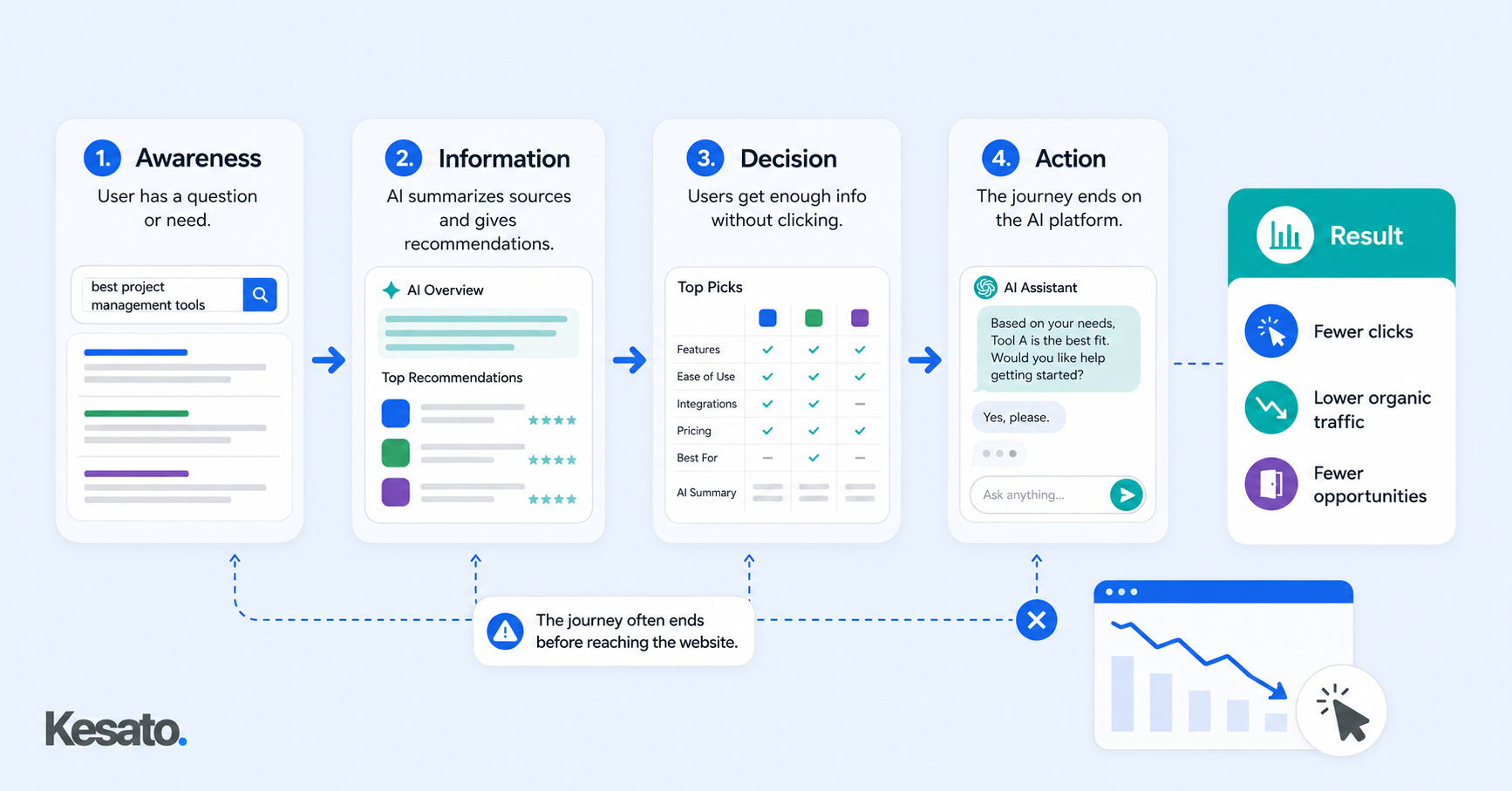
The traditional search journey used to end with a click. Today, it often ends on the AI platform itself, before a user ever reaches your website.
- Awareness: A user has a question or a need, the same starting point as always.
- Information: Instead of scrolling through ten blue links, AI reads multiple sources and provides a summary and recommendations in seconds.
- Decision: The user already has enough information to decide, so there’s no real reason left to click through.
- Action: The journey ends right there, inside the AI platform, whether that’s a chat window or an AI Overview box at the top of Google.
The result: fewer clicks, lower organic traffic, and fewer opportunities for brands that rely purely on rankings to drive business. This shift is what’s driving the rise of zero click search, where users get complete answers without ever visiting a website. It’s also why answer engine optimization and generative engine optimization have become priorities: brands now need to earn a place inside the AI’s answer itself, not just a spot on the results page.
To put this into perspective, Gartner projects a 50%+ drop in organic search traffic by 2028 as generative AI search scales, and separate data from Similarweb, shows roughly 69% of Google searches already end without a click, a number that climbs even higher once an AI Overview appears. We’ll break down the full impact of AI on organic traffic in a separate article, but the takeaway for now is simple: relying on clicks alone is no longer a safe strategy.
Is SEO in the Age of AI Still Relevant?
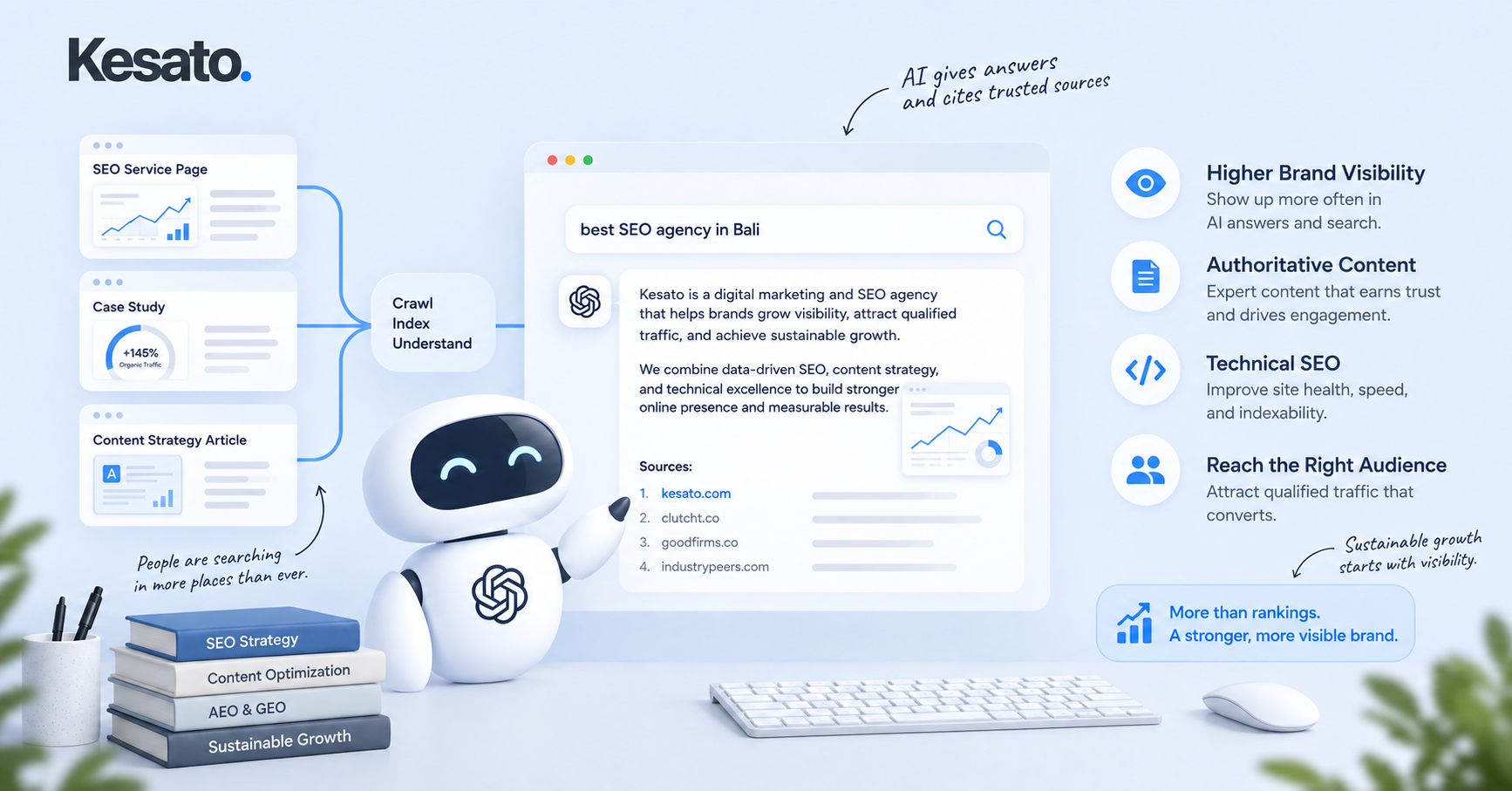
Yes, and here’s why. Even though AI platforms answer questions directly, they still need a source to pull that answer from. AI systems don’t create information out of thin air, they crawl, index, and synthesize content from websites that are well-structured, authoritative, and trustworthy, in many ways similar to how a traditional search engine ranks pages. In short, AI search and SEO are more connected than ever before, not competing forces.
If your content isn’t optimized, AI simply won’t find it, trust it, or reference it, no matter how good your product or service actually is. That means strong technical SEO, clear content structure, schema markup, and credible sources still form the foundation of visibility, whether a user finds you through a traditional search result or through an AI-generated answer that cites your page as a source. Working with an experienced SEO agency in Bali can help you build that foundation the right way, instead of guessing what AI wants and reacting too late.
What Is the Future of SEO in the Age of AI?
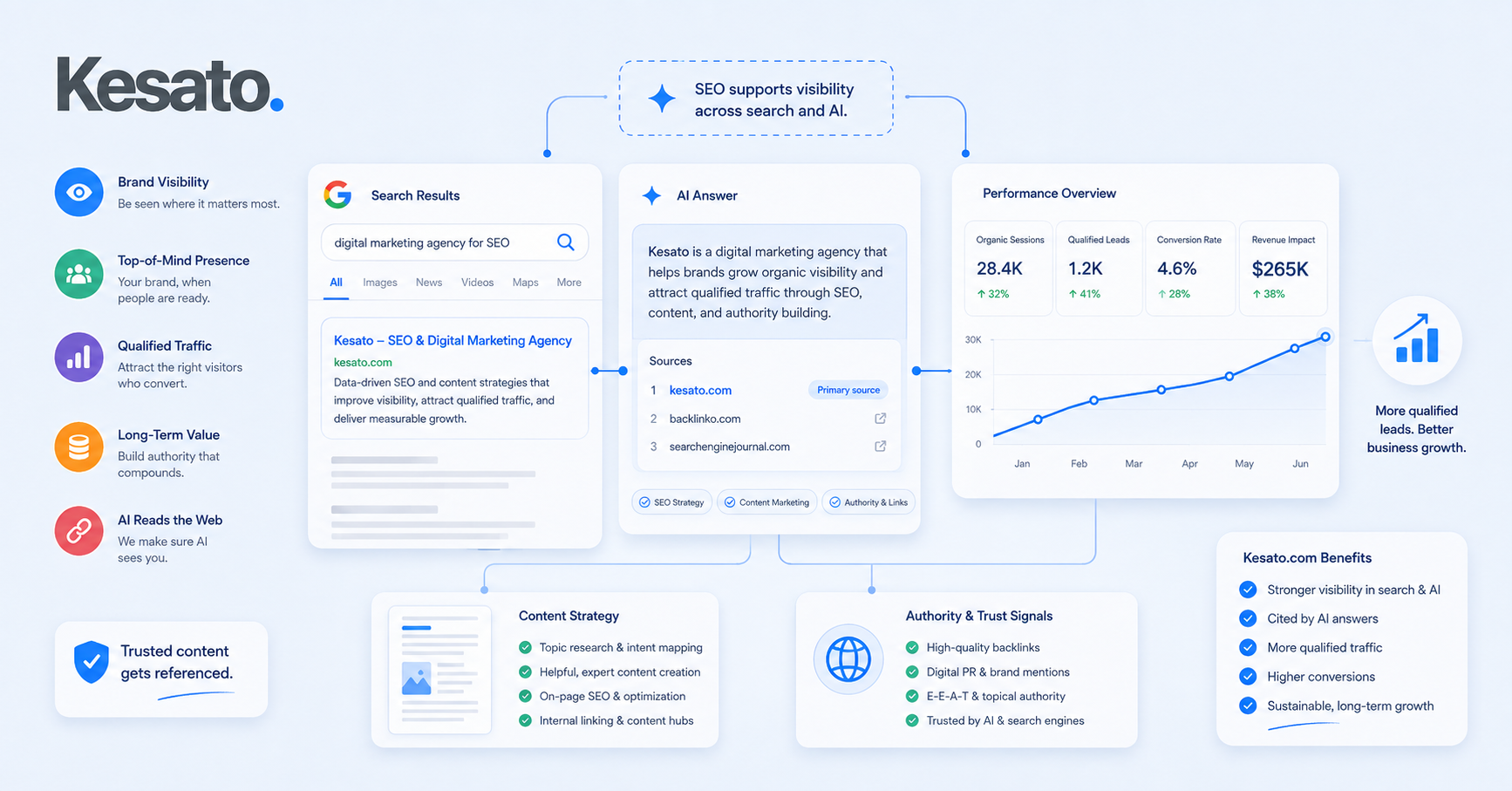
The future of SEO isn’t about chasing clicks alone anymore, it’s about building long-term brand equity that both AI and humans recognize as trustworthy and worth referencing.
- Brand Visibility: Your content can appear directly inside an AI answer if it’s trusted, well-cited, and authoritative in its niche, essentially becoming a source AI leans on repeatedly.
- Top of Mind Presence: Even without a click, your brand gains exposure during the research phase of the customer journey, planting the seed before the user ever compares options elsewhere.
- Quality Traffic Matters: Visitors who do click through, even in smaller numbers, tend to be more qualified and closer to making a decision, which usually means better conversion rates.
- Long-Term Asset: SEO builds a foundation of content, authority, and backlinks that AI platforms rely on today and will continue relying on as their models get updated and retrained.
- AI Reads the Web Too: AI pulls information from websites the same way search engines always have. The stronger your SEO for AI search, the higher the chance your brand gets referenced instead of a competitor.
This is where AI search optimization and AI search visibility come into play as ongoing priorities, not one-time projects. It’s no longer just about ranking #1 on Google, it’s about making sure your brand shows up wherever your audience is asking questions, including inside AI-generated answers, voice assistants, and chat-based search.
New Website or Established Brand? SEO in the Age of AI Works Differently
A website’s age and authority level change what “good SEO” actually looks like. Treating a brand-new site the same way as a five-year-old authority site usually wastes time and budget on the wrong priorities.
For newer websites (under 1 year), the priority is building SEO strength first: technical foundation, keyword and intent targeting, high-quality content, internal linking, and authority building, all aimed at laying a strong foundation for long-term growth.
For established websites (5+ years), the focus shifts to protecting and expanding: protecting existing rankings, refreshing underperforming content, expanding search coverage, and building AI-ready content, entity authority, and multi-platform presence across AI Overviews, ChatGPT, Perplexity, and more.
This maturity-based approach, built on continuous data-driven optimization, monitor performance, analyze opportunities, optimize and iterate, then report and communicate results, is the same method we apply at Kesato when building SEO strategies for our clients. We’ll go deeper into this two-track SEO strategy in a separate article.
Practical Steps to Improve SEO in the Age of AI
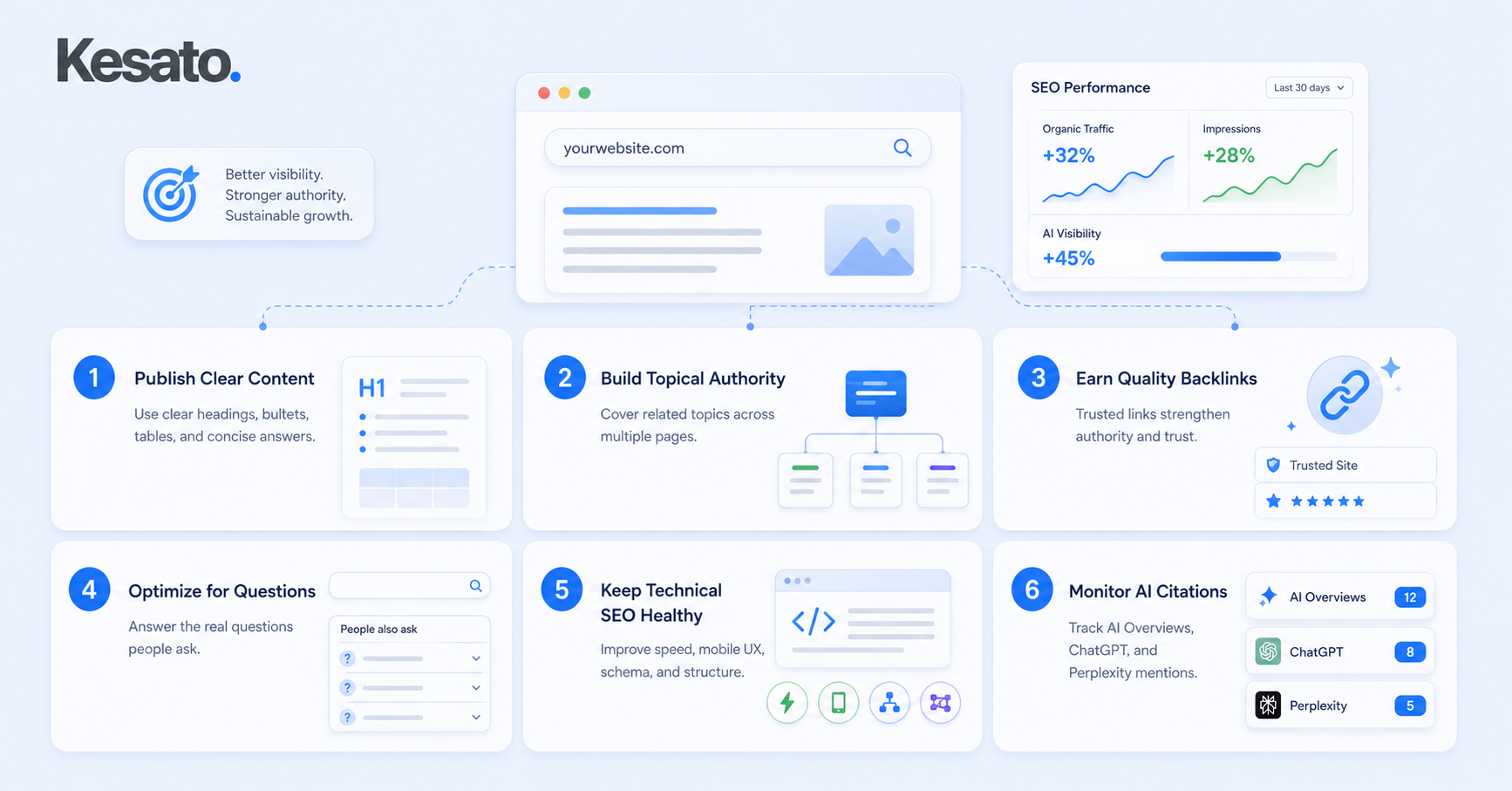 SEO in the age of AI is less about changing everything and more about improving the right things. A few practical adjustments can make your website easier to understand, more authoritative, and more likely to appear across both traditional and AI-powered search.
- Publish clear, well-structured content: Use descriptive headings, bullet points, tables, and concise, direct answers near the top of the page so AI can easily extract and quote them.
- Build topical authority: Don’t just publish one article, cover your niche in depth across multiple related pages so AI recognizes your site as a genuine expert, not a one-off mention.
- Earn quality backlinks: Authority signals from reputable sites still matter for both traditional rankings and how confidently AI cites your content as a source.
- Optimize for questions: Structure content around the actual questions your audience types or speaks into AI tools, not just isolated keywords stuffed into a paragraph.
- Keep technical SEO healthy: Fast load times, mobile-friendliness, clean site structure, and proper schema markup remain non-negotiable, since AI crawlers still need to access and understand your site efficiently.
- Monitor AI citations, not just rankings: Start tracking whether your brand appears in AI Overviews, ChatGPT answers, or Perplexity results, this is quickly becoming as important as tracking your position on page one.
Want to check where your website stands? Our SEO and GEO checklist walks through indexing, structured data, and AI crawler access step by step.
If this feels like a lot, Kesato, a trusted SEO agency in Bali, helps brands build a SEO in the age of AI strategy covering both traditional rankings and generative engine optimization, so you stay visible no matter how your audience searches.
Frequently Asked Questions About SEO in the Age of AI
Does AI Search Mean SEO Is Dead?
No, that’s a common misconception. AI search still relies on well-optimized websites as its source of truth. SEO in the age of AI simply means combining traditional ranking factors with AI visibility, not replacing one with the other.
What Is Answer Engine Optimization?
Answer engine optimization is the practice of structuring content so AI platforms like ChatGPT, Google AI Overviews, and Perplexity can easily understand, summarize, and reference it directly inside their answers, often referred to as AEO or GEO depending on the platform.
How Can I Improve My AI Search Visibility?
Focus on authoritative content, clear structure, strong backlinks, and genuine topical depth across your site. Partnering with an experienced SEO agency in Bali like Kesato can speed up the process significantly and ensure your AI search optimization strategy covers technical, content, and authority factors all at once.