Key takeaways
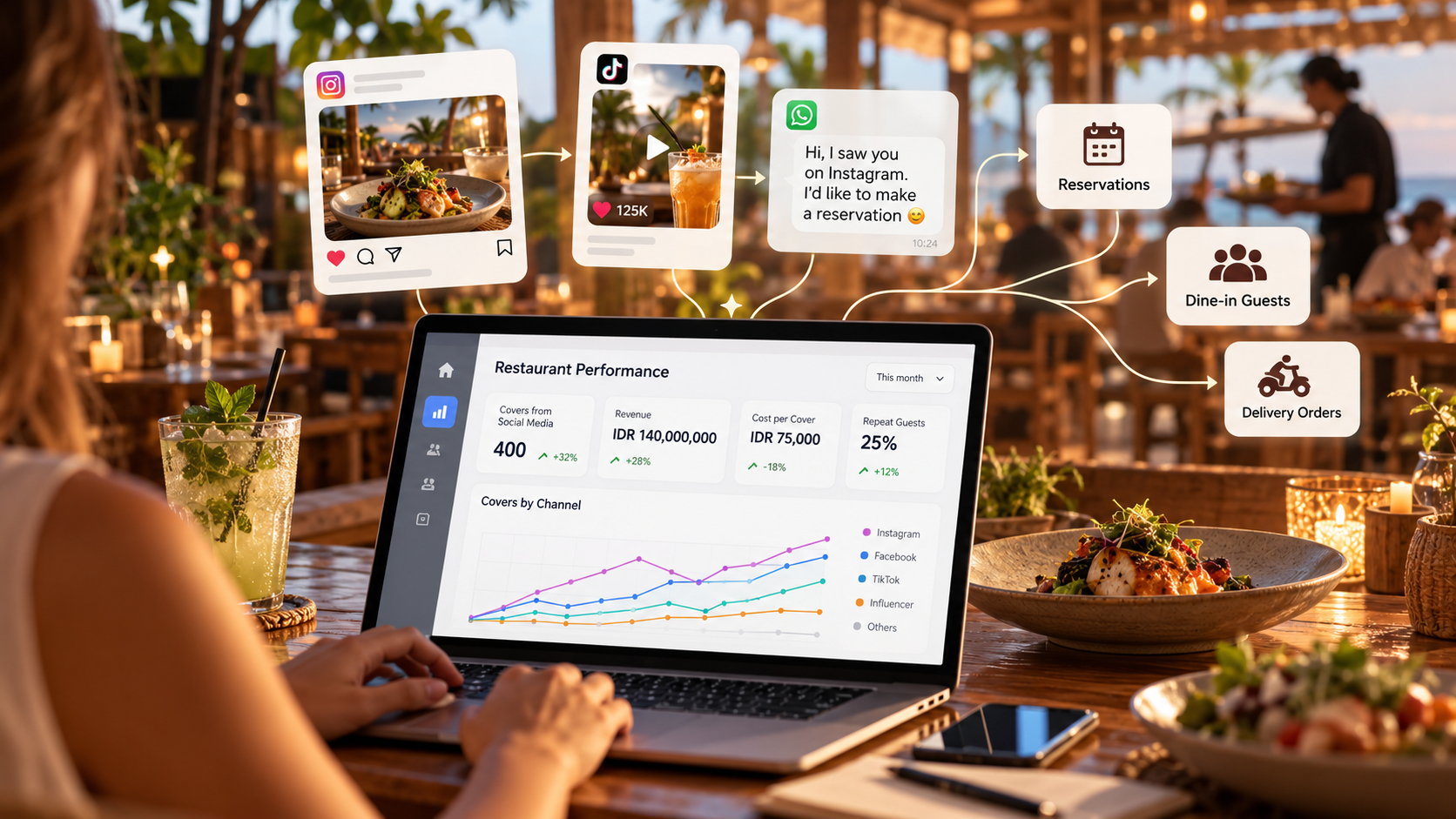
- Social media ROI for restaurants should be measured in covers, revenue and repeat guests, not likes and followers.
- The hardest part is tracking the journey from a post to a table, because many guests book by WhatsApp, walk in or order through delivery apps.
- Simple tools, such as tracked reservation links, campaign codes and a “how did you hear about us” question, make most of that journey visible.
- A monthly review that compares cost per cover across channels shows exactly where the next marketing budget should go.
A restaurant posts every day, runs ads every month and hosts influencers every few weeks. The feed looks beautiful and the comments are warm. Yet when the owner asks a simple question, “how many guests did all this bring in?”, nobody can give a clear answer.
That gap is common, and it is expensive. Without knowing which posts, campaigns and creators actually fill tables, restaurants either keep spending on what looks good or cut marketing that was quietly working.
Why Restaurant Social Media ROI Is Hard to Prove
Unlike an online store, a restaurant rarely sees a direct click from a post to a sale. The path from Instagram to the table usually breaks in 4 places:
- WhatsApp reservations: Guests message to book, and the source of the conversation is never recorded.
- Walk-ins: People see a reel, save the location and turn up days later without telling anyone why.
- Booking and delivery platforms: Reservations and orders arrive through third-party apps that do not show what inspired them.
- Delayed decisions: A tourist might see a post in March and visit in July.
The solution is not perfect tracking. It is enough tracking to make good decisions.
Which Metrics Matter Most for a Restaurant?
Restaurant social media metrics fall into 3 levels. Only the first level proves ROI, but the other 2 explain why results go up or down.
| Level | Metrics | What they tell you |
| Business results | Covers from social media, revenue from tracked guests, cost per cover, repeat visit rate | Whether marketing pays for itself |
| Intent signals | Reservation link clicks, WhatsApp chats started, Google Maps direction requests, menu page views | Whether people are moving towards a visit |
| Reach and engagement | Reach, saves, shares, comments, follower growth | Whether content is being seen and remembered |
Saves and shares deserve special attention. A saved post often means “I want to go there,” which makes it a stronger signal than a like.
Are likes and followers useless for restaurants?
No, but they are supporting signals, not proof. They show content is working, while covers, revenue and repeat guests show marketing is working.
How to Track Guests From Social Media to the Table
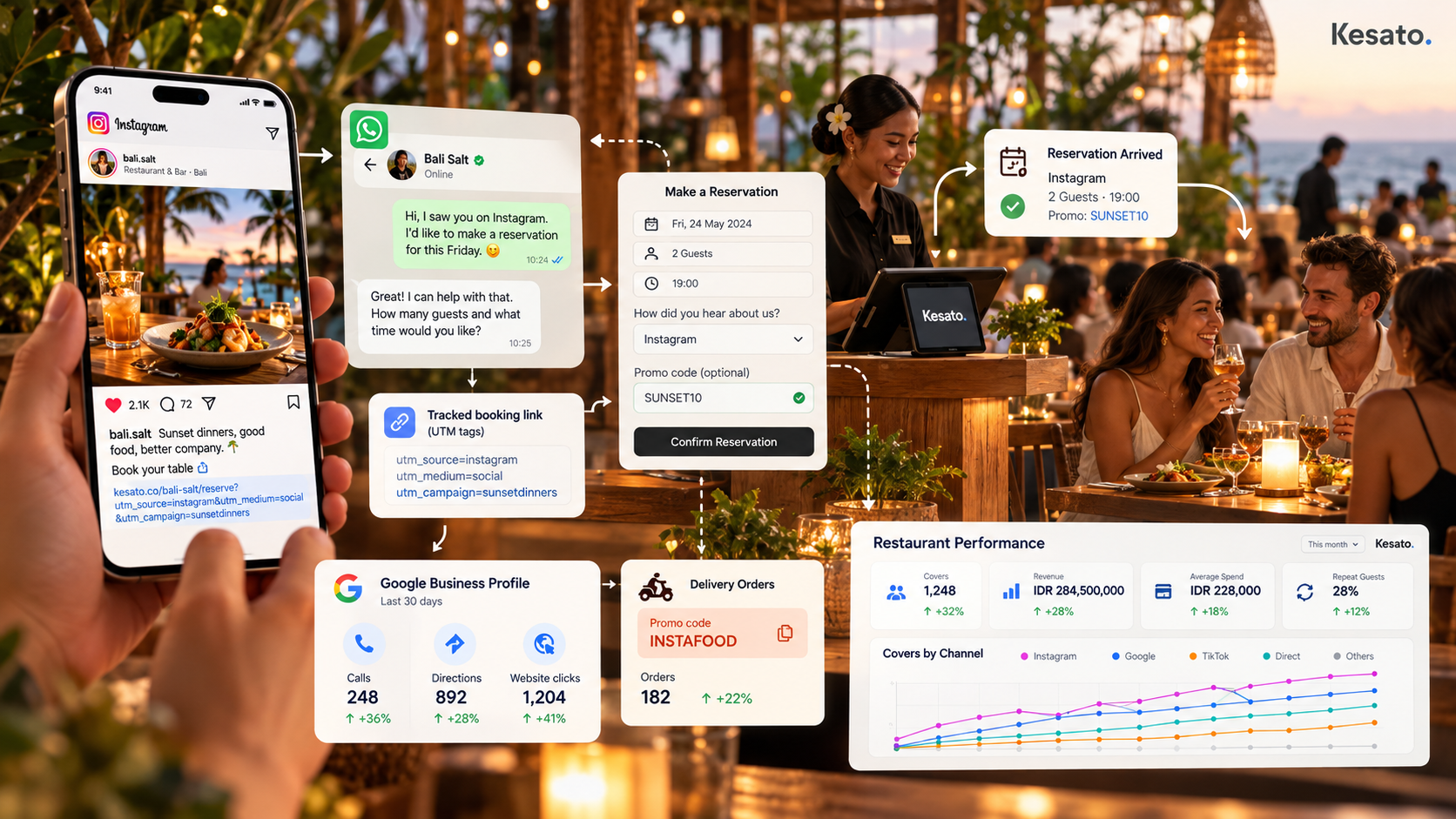
Most of the journey can be made visible with a few practical habits. None of them need expensive software.
- Tracked reservation links: Use a separate link with UTM tags in the Instagram bio, stories and ads, so bookings from social media show up clearly in analytics.
- A dedicated WhatsApp link: Add a pre-filled message such as “Hi, I saw you on Instagram” to the WhatsApp link on social profiles, so the source appears in every chat.
- Campaign and creator codes: Give each campaign and each influencer a unique code or offer, and record it at the table or at checkout.
- One question at booking: Ask “how did you hear about us?” during reservations and record the answer in the booking system or POS.
- Google Business Profile insights: Watch calls, direction requests and website clicks, which often rise after a strong social campaign.
- Delivery app promo codes: Use separate codes on social media to see which posts drive delivery orders.
- A monthly reconciliation: Bring all sources together once a month and compare them with total covers and revenue.
A Simple Restaurant ROI Example
The calculation itself is simple once the data is tracked. The example below uses illustrative figures to show the method.
| Item | Illustrative monthly figure |
| Content production, ads and influencer costs | IDR 30,000,000 |
| Covers traced to social media | 400 |
| Average spend per cover | IDR 350,000 |
| Revenue from tracked guests | IDR 140,000,000 |
| Gross profit at a 65% margin | IDR 91,000,000 |
| Cost per cover | IDR 75,000 |
| ROI | (91,000,000 − 30,000,000) ÷ 30,000,000 = 203% |
Using gross profit rather than revenue gives a more honest picture, because food and drink costs are part of every cover. Tracked guests also understate the real impact, since some guests inspired by social media are never recorded. Broader methods for other industries are covered in the guide on how to measure social media ROI.
What to Review Each Month
A short monthly review turns tracking into better decisions. These are the questions worth answering every time.
- Which channel had the lowest cost per cover? Shift budget towards it.
- Which posts and reels drove the most saves, clicks and WhatsApp chats? Make more of that type of content.
- Which influencers produced tracked visits? Keep working with the ones who deliver and stop paying for the ones who do not.
- How many guests came back? Repeat visits show whether the experience matches what social media promised.
- What do new reviews mention? Reviews often reveal which posts, dishes or events brought people in.
Getting Help Measuring Restaurant Marketing
Many restaurant owners are too busy running service to build tracking systems themselves. A digital marketing agency with F&B experience can set up the links, codes, CRM and reporting, then manage content and campaigns against clear revenue targets.
Kesato works with restaurants, beach clubs and F&B groups in Bali, connecting social media management, content production, paid ads and CRM so every campaign can be measured in covers and revenue. As a Google Premier Partner, Kesato builds reporting around business results rather than vanity metrics. A full overview is available in the profile of this 360 digital agency in Bali.
Turning Followers Into Full Tables
Social media can be one of the most profitable channels for a restaurant, but only when its results are measured in guests and revenue. A few simple tracking habits are enough to see what works, stop what does not and grow with confidence.
For restaurants and F&B groups that want marketing they can measure, talk to Kesato about setting up tracking and campaigns built around real covers.
Frequently Asked Questions
How long does it take for restaurant social media to show ROI?
Paid campaigns and influencer visits can show tracked covers within weeks. Organic content and community building usually take 2 to 3 months to show a clear trend.
Should restaurants pay for Instagram ads or focus on organic content?
Both work best together. Organic content builds trust and a recognisable style, while targeted ads put that content in front of nearby residents and visitors.
How can a restaurant measure influencer ROI?
Give each creator a unique code, offer or link, then compare tracked covers and revenue against the total cost of the collaboration, including hosted meals.