Key takeaways
- Most Bali businesses do not need a mobile app to start. A fast, mobile-friendly website with booking and WhatsApp covers the majority of customer needs.
- An app becomes worth it when customers return often, when there is a loyalty or membership programme, or when guests need services during their stay.
- A progressive web app can be a practical middle ground, offering app-like features without app store downloads.
- A good app is built around a clear job for the user, not around the idea of “having an app.”
Whether to build an app is one of the most common questions hotel, restaurant and brand owners in Bali ask when their business starts to grow. Apps feel modern and premium, and competitors sometimes have one.
But an app that nobody downloads, or that guests open once and forget, is an expensive way to stand still. The real question is not whether an app would be nice to have, but whether customers would use it often enough to justify building and maintaining it.
Mobile App or Mobile Website?
Nearly every customer reaches a Bali business through a phone. Indonesia alone had 230 million internet users at the end of 2025 (DataReportal), and international visitors plan trips on their phones too. Both apps and mobile websites serve these users, but in very different ways.
| Factor | Mobile website | Mobile app |
| How customers find it | Google, AI assistants, social media, links | App Store or Google Play, usually after already knowing the brand |
| Effort for the customer | Opens instantly in a browser | Must be downloaded and installed |
| Search and AI visibility | Pages can rank on Google and be cited by AI | App content is largely invisible to search |
| Relative cost and time | Lower, faster to launch | Higher, with separate iOS and Android versions and app store reviews |
| Updates | Changes go live immediately | Many updates need app store approval |
| Best features | Information, booking, enquiries, content | Notifications, loyalty, offline access, device features |
For first-time visitors discovering a business, the mobile website almost always does the heavy lifting. Apps serve people who already know the brand and come back often.
When a Bali Business Does Need an App
An app makes sense when it solves a problem a website cannot solve as well. These situations come up most often in Bali.
- Hotel and villa groups with loyalty programmes: Returning guests can book directly, collect points and receive member offers across several properties.
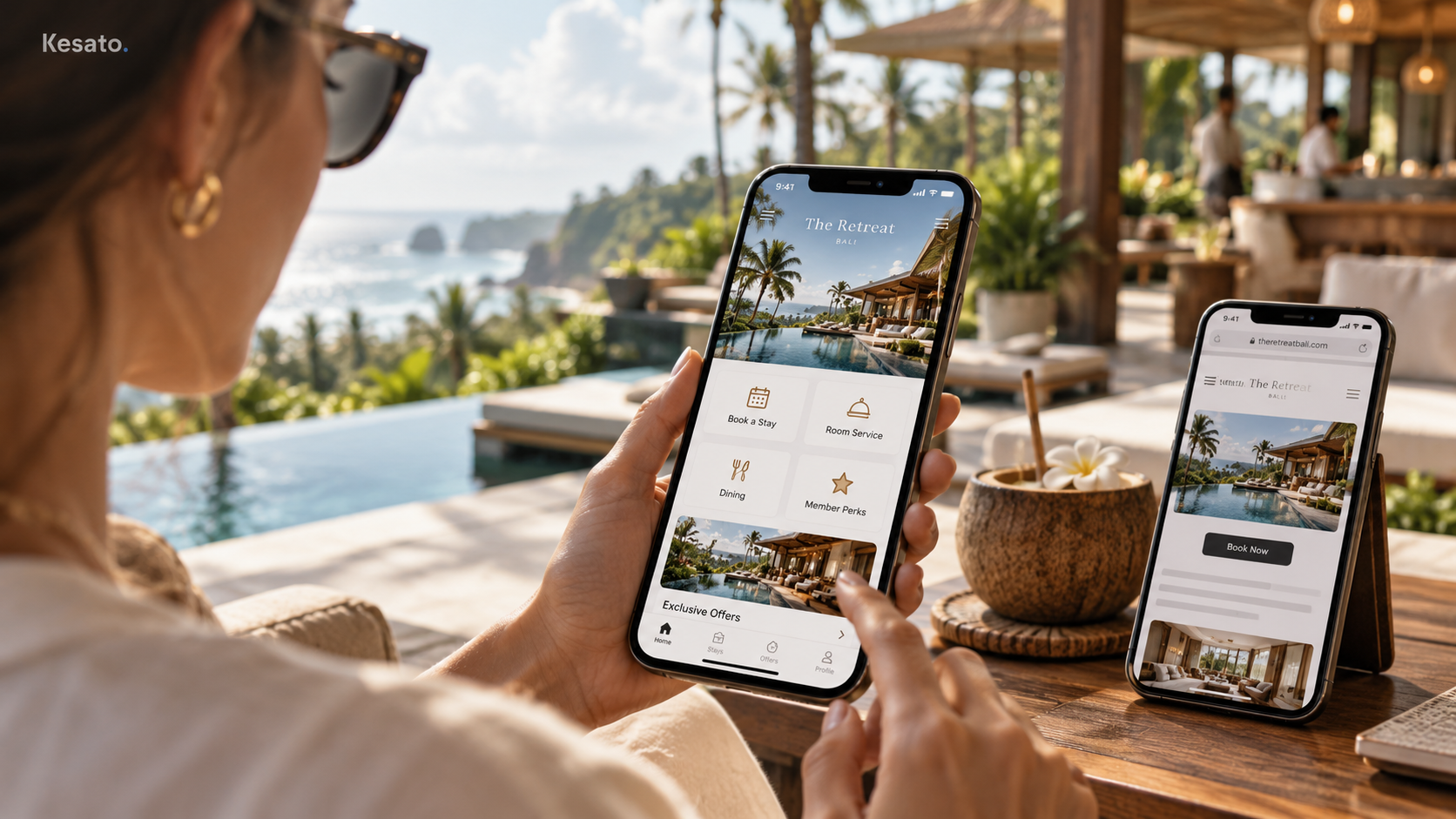
- Resorts with in-stay services: Guests order room service, book spa treatments, reserve restaurants or request transfers from their phone during the stay.
- Beach clubs, gyms and coworking spaces with memberships: Members check in, book classes or daybeds and receive event updates.
- Restaurant groups with frequent diners: Ordering, loyalty rewards and personalised offers encourage repeat visits.
- Brands with repeat online customers: Fashion, lifestyle and wellness brands that sell online benefit from saved carts, notifications and faster reordering.
- Internal operations: Apps for staff, such as housekeeping, maintenance or field sales, can save time across larger teams.
Can a progressive web app replace a native app?
Often, yes. A progressive web app runs in the browser but can be saved to the home screen and send notifications, which suits many businesses that want app-like features at a lower cost.
When an App Is Probably Not Worth It
Some businesses build apps too early, then struggle to get downloads. An app is usually not the best investment when:
- Guests visit once: Most tourists stay a few days and rarely return within a year.
- There is only 1 property or venue: A strong website, Google Business Profile and WhatsApp often cover everything guests need.
- The website is not working yet: If bookings and enquiries are low on the website, an app will not fix the underlying problem.
- There is no plan to promote it: Apps need ongoing marketing to earn downloads and keep users active.
For many villas and hotels, investing first in the booking experience on the website delivers faster results, as explained in the guide on how Bali villas get more direct bookings.
What a Good Hospitality App Should Include
When an app is the right choice, its features should focus on what guests actually do. These are the features most hospitality and lifestyle apps rely on.
| Feature | Why it matters |
| Direct booking and reservations | Keeps revenue and guest data away from third-party platforms |
| Loyalty and member rewards | Gives guests a reason to keep the app installed |
| Push notifications | Delivers offers, event news and reminders at the right moment |
| In-stay services | Room service, spa, transfers and requests in one place |
| Secure payments | Faster checkout for bookings, orders and add-ons |
| CRM integration | Connects app activity to guest profiles and marketing campaigns |
| Multiple languages | Serves international and domestic guests equally well |
CRM integration is often what turns an app from a nice extra into a real business tool. The guide to choosing a CRM implementation partner in Bali explains why.
How a Mobile App Project Usually Works
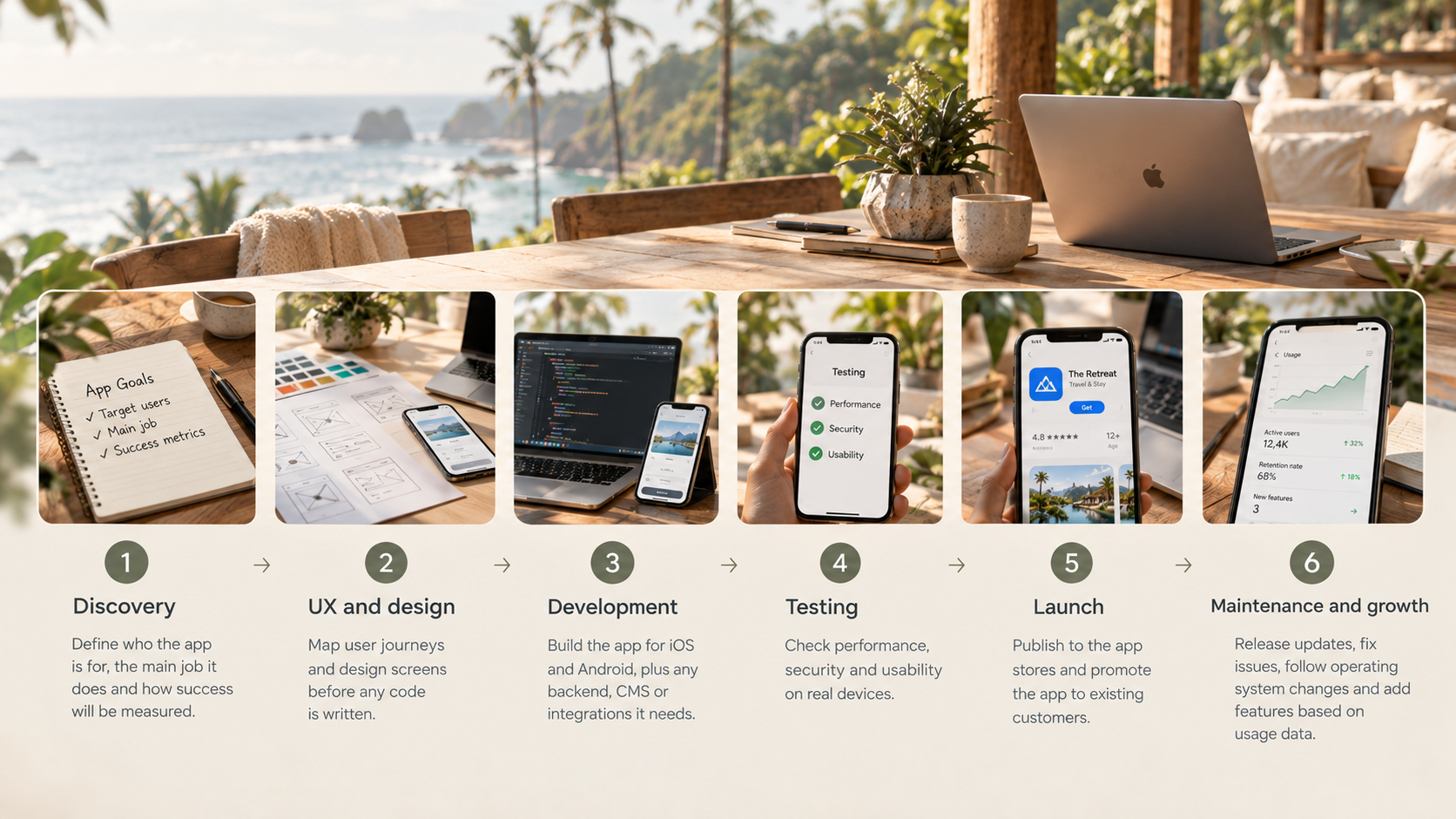
Building an app is a multi-stage project. Knowing the stages helps owners plan time and budget realistically.
- Discovery: Define who the app is for, the main job it does and how success will be measured.
- UX and design: Map user journeys and design screens before any code is written.
- Development: Build the app for iOS and Android, plus any backend, CMS or integrations it needs.
- Testing: Check performance, security and usability on real devices.
- Launch: Publish to the app stores and promote the app to existing customers.
- Maintenance and growth: Release updates, fix issues, follow operating system changes and add features based on usage data.
Which Agencies in Bali Build Mobile Apps?
Business owners looking for mobile app development in Bali will find freelance developers, software houses and digital agencies. For hospitality and lifestyle businesses, the strongest results usually come from teams that understand both the technology and how the app will be marketed and used by guests.
Kesato builds iOS and Android apps, websites and integrations for hotels, villas, restaurants and growing brands, alongside branding, UX and digital marketing. Because the same team handles web design and development, CRM and marketing, Kesato can advise honestly on whether an app, a progressive web app or a stronger website is the right next step. Groups planning for growth can also read how to scale a villa business in Bali, and a full overview of the agency is available in the profile of this 360 digital agency in Bali.
Build the App Only When It Earns Its Place
A mobile app can deepen loyalty, increase direct revenue and improve the guest experience, but only when customers have a clear reason to use it again and again. For many Bali businesses, the smartest path is to perfect the website first, then add an app when the business and its returning audience are ready.
For hotels, restaurants and brands weighing their options, talk to Kesato about whether an app, a progressive web app or a better website is the right next move.
Frequently Asked Questions
How long does it take to build a mobile app?
Simple apps can take a few months, while apps with bookings, payments, loyalty and integrations usually take longer. Scope and content readiness make the biggest difference.
Should an app be built for iOS and Android at the same time?
Usually, yes. International visitors often use iPhones, while many domestic customers use Android, so most hospitality apps need both from launch.
How can a business get people to download its app?
Promote it where guests already interact: booking confirmations, check-in, QR codes on site, email and member-only offers that only work in the app.