
Every agency calls itself the best, which makes choosing one genuinely hard. The label “top SEO-focused digital agency” only means something once you know the standard behind it. Below are the traits that separate a top agency in 2026, the questions that expose a weak one, and the red flags that should end a conversation early. Work through them and you can judge any agency on evidence rather than sales talk.
What “SEO-Focused” Means in 2026: SEO and GEO
A top SEO-focused agency in 2026 optimizes for two search worlds at once: traditional rankings and AI-generated answers. Search no longer ends at the classic list of blue links. AI Overviews now appear on roughly half of US Google searches, up from about 6% at the start of 2025 (BrightEdge and Google), and Google reports the feature reaches more than two billion people every month (via TechCrunch). An agency that still treats search as keywords and backlinks alone is solving a smaller problem than the one your business actually has.
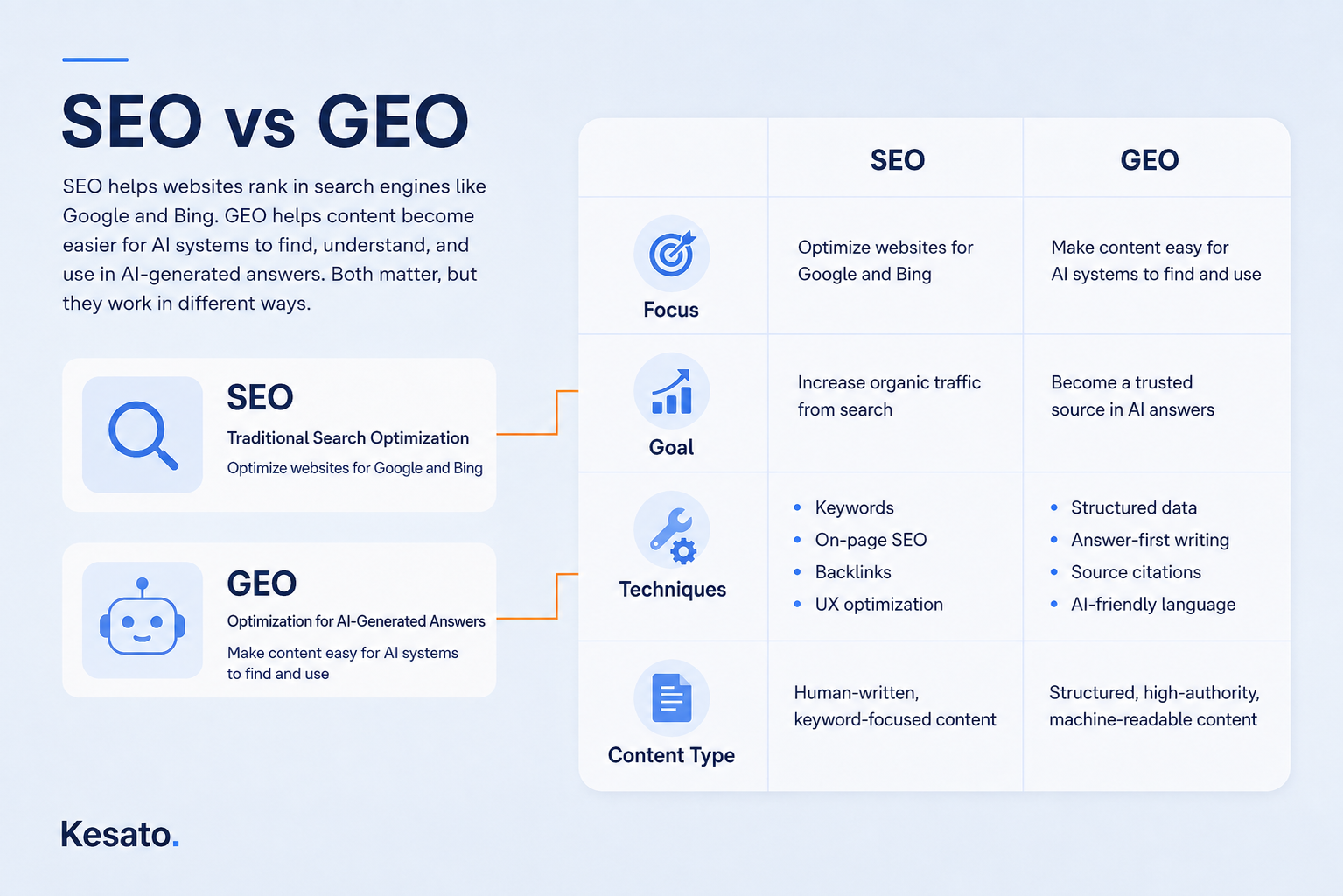
This is where Generative Engine Optimization, sometimes called Answer Engine Optimization, becomes essential. GEO is the practice of shaping content so AI search engines can understand, trust, and cite it inside their answers. In practice that means clear structure, well-defined entities, quotable facts, and strong authority signals, so your business surfaces when someone asks an AI rather than typing a query. For example, a concise, well-structured answer to a real customer question is far easier for an AI to lift into an Overview than the same facts buried in a long, unstructured page.
A top agency blends both disciplines: classic SEO to win rankings and clicks, and GEO to earn visibility inside AI answers on Google, ChatGPT, and similar tools. When you evaluate an agency, treat GEO capability as a baseline requirement, not a bonus. If GEO never comes up, the agency is optimizing for the search of five years ago. The strongest candidates fold SEO and SEM together with GEO into one connected strategy rather than selling them as separate lines on an invoice.
The Signs of a Top SEO-Focused Agency
Once GEO is on the table, a handful of signals separate a serious agency from a hopeful one. Look for these:
- Proven results, shown with evidence. Real case studies with before-and-after numbers matter far more than a promise of “page one.” Ask to see outcomes tied to revenue or leads, not only rankings.
- Transparent reporting. A top agency defines success metrics up front and reports against them in plain language, so you always know what your money bought.
- Full-stack capability. Ranking well needs technical SEO, on-page work, and original, high-quality content together. An agency strong in only one of these leaves gaps that quietly cap your growth.
- Ethical, white-hat methods. Durable results come from earning authority, not gaming it. Shortcut tactics can win for a quarter and then trigger a penalty that costs a year.
- Clear communication. The people who pitch you should be reachable, specific, and honest about timelines, because search results are a partnership measured in months.
How long before an SEO agency shows results?
Most legitimate SEO work takes about three to six months to show meaningful movement, which matches Ahrefs data, while Google’s own guidance puts the fuller benefit at four months to a year. Competitive niches can take longer, since Ahrefs found the average top-ranking page is more than two years old. Any agency guaranteeing top rankings in weeks is either misunderstanding search or misleading you.
Questions to Ask Before You Hire an Agency
The fastest way to test an agency is to ask questions a weak one cannot answer well. Bring these to the first serious conversation:
- How do you measure success, and which metrics will you report each month?
- What is your approach to GEO and visibility inside AI search?
- Can you show reporting samples and case studies from businesses like mine?
- Who will actually work on my account, and how often will we speak?
- What do the first ninety days look like before results appear?
Pay attention to how specific the answers are. A top agency talks in concrete process and evidence. A weak one leans on vague reassurance and pressure to sign quickly.
Red Flags to Watch For
Some warning signs should end the evaluation on their own. Walk away when you see:
- Guarantees of number one rankings or a set of keywords “guaranteed” to the top
- “Secret” methods the agency will not explain
- Reports filled with vanity metrics that never connect to leads or sales
- Buying links or other tactics that break search engine guidelines
- One-size-fits-all packages offered before anyone has studied your business
- High-pressure selling paired with long lock-in contracts
Each of these points either to a lack of skill or to a willingness to risk your site’s long-term health for a short-term win.
Why Industry and Local Fit Matters
An agency that already understands your industry and market moves faster and wastes less budget. It knows the seasonality, the buyer intent, and the search behavior of your customers, so it skips the learning curve a generalist has to climb.
For location-driven businesses this matters even more, because local search signals and multilingual content often decide who gets found. A brand serving international audiences needs an agency that can rank the same offering across different languages and search habits, not just one home market.
This is clearest in specialized sectors like hospitality, real estate, and food and beverage, where audiences research in distinct ways and frequently across more than one language. An agency with genuine experience in these verticals can build a strategy around how travelers, property buyers, and diners actually search, instead of stretching a template built for an unrelated market. A villa rental brand in a tourist market, for instance, needs pages that match how travelers really search, often in several languages and around specific places, rather than the broad terms a generalist would reach for first.
Should you pick a local SEO agency or a global one?
Prioritize relevant industry and market experience over physical location. An agency that deeply understands your sector and audience usually outperforms a nearby generalist, especially now that most collaboration happens remotely.
What a Strong First 90 Days Looks Like
A top agency earns trust before it earns rankings, so the early engagement should follow a clear rhythm rather than promise instant wins:
| Timeframe | Focus | What to expect |
|---|---|---|
| First month | Discovery and full audit | A technical, on-page, content, and AI-visibility review, plus a prioritized roadmap with baseline metrics and realistic targets |
| Weeks 1 to 6 | Fix foundations and quick wins | Resolving crawl issues, tightening priority pages, and strengthening the content most likely to be cited by AI search |
| Ongoing from day one | Compounding work | Authority building and deeper content that runs alongside and pays off in later months |
The audit is where a good agency proves it understands your situation, because it surfaces the specific issues holding you back instead of generic advice. Knowing this rhythm also protects you from panic when rankings have not jumped by week three, and it gives you a concrete way to confirm an agency is doing real work rather than sending a monthly invoice with little behind it.
What should a top agency deliver in the first month?
A discovery session, a technical and content audit, and a prioritized roadmap with baseline metrics. Rankings should not be the month-one deliverable; a clear plan and a fixed set of targets should be.
Making the Right Choice for Your Growth
Choosing a top SEO-focused digital agency comes down to evidence over promises: proof of results, a real GEO strategy, transparent reporting, and genuine fit with your industry. Turn the criteria, questions, and red flags above into a simple scorecard, rate each agency against them, and the right partner becomes far easier to spot. For businesses in hospitality, real estate, and food and beverage that want SEO and GEO built into one strategy, Kesato is ready to help you get found across both traditional and AI search.
Frequently Asked Questions
How much does a good SEO agency cost?
Pricing varies widely with scope, competition, and goals. Focus less on the lowest quote and more on what is included, since cheap SEO often means thin work or risky shortcuts that cost more to repair later.
Do you still need SEO if you already run paid ads?
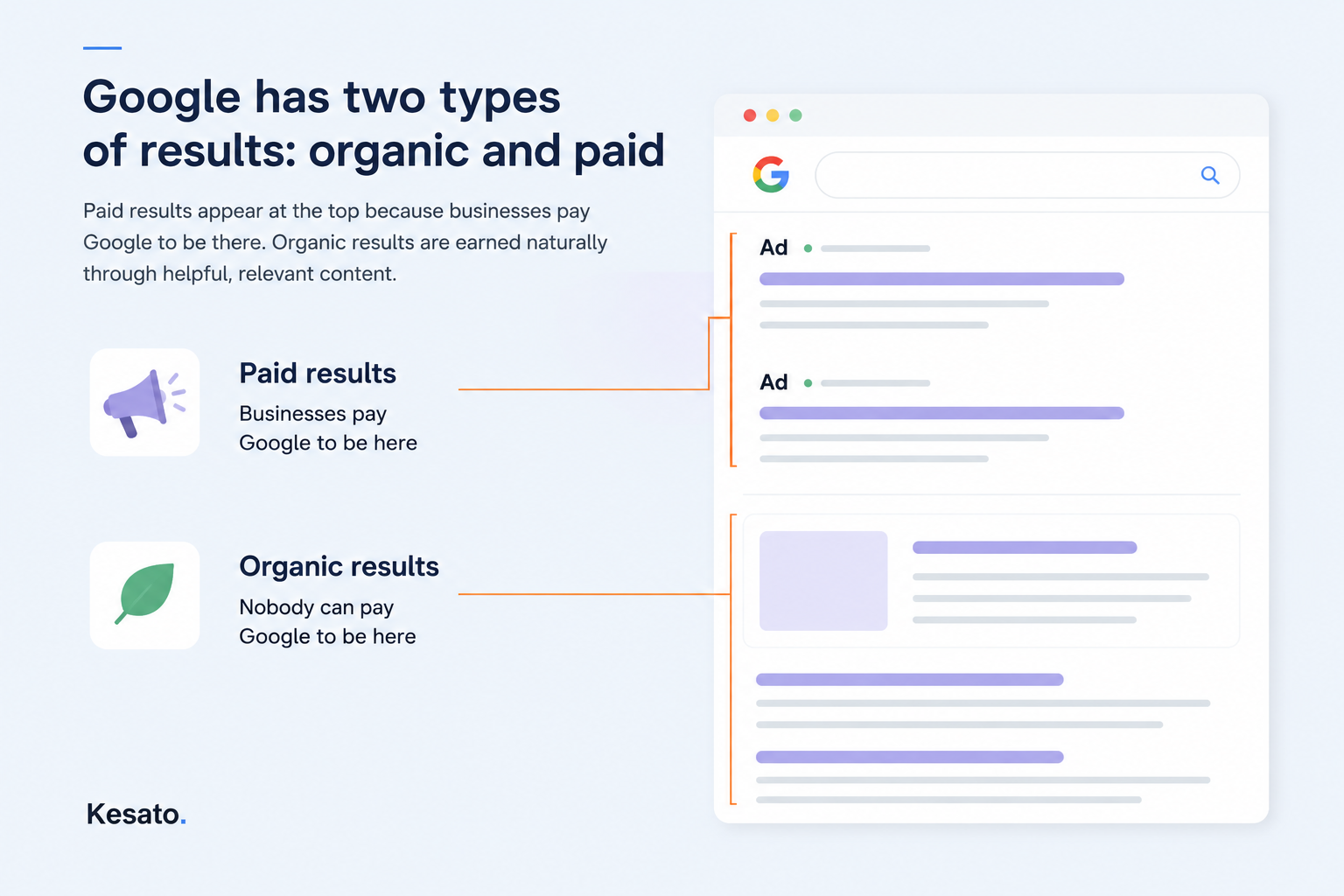
Yes. Paid ads stop the moment the budget stops, while SEO and GEO build visibility that compounds over time. The two work best together, with paid driving immediate traffic and organic building durable authority.
How can you tell if an agency uses white-hat methods?
Ask them to explain exactly how they build authority and links. White-hat agencies describe earning relevance through quality content and genuine outreach, while risky ones stay vague or promise fast results through tactics they will not name.
What is GEO, and why should an SEO agency offer it?
GEO, or Generative Engine Optimization, is the work of getting your content understood and cited inside AI answers, not only ranked in the classic results. With AI Overviews now on roughly half of US Google searches, an agency that ignores GEO leaves a large and growing slice of visibility on the table.